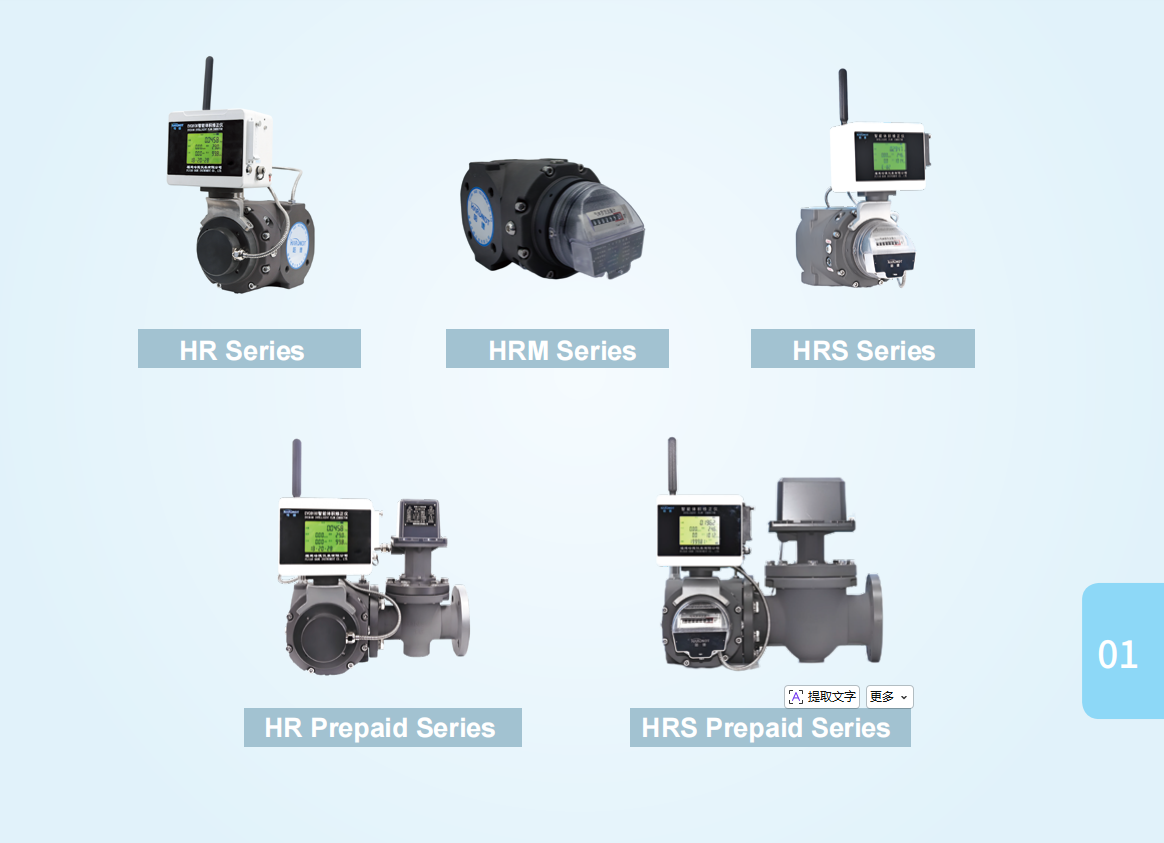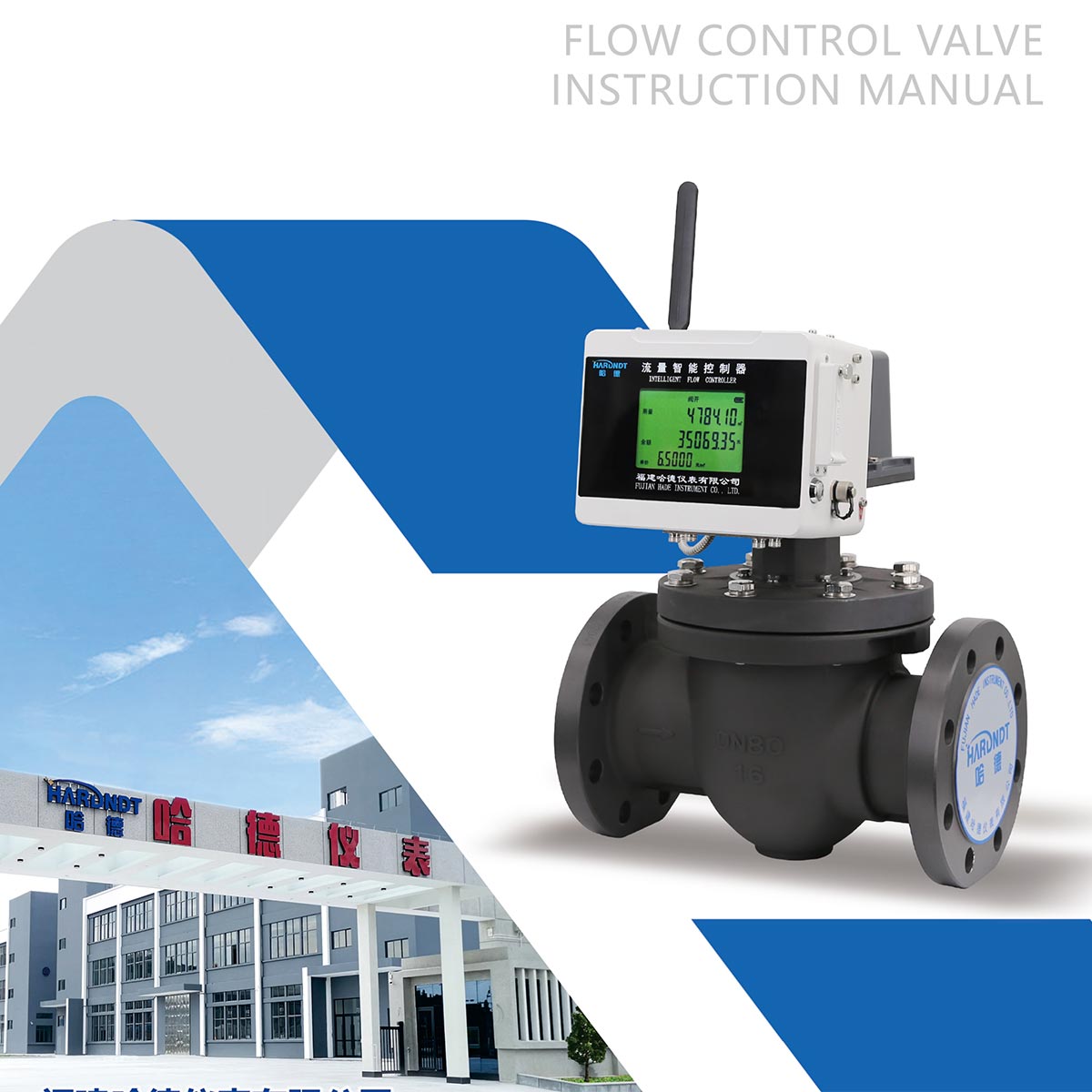
In natural gas distribution, industrial gas, and commercial metering, rotary positive displacement (roots) flowmeters are widely recognized for their high accuracy, wide turndown ratio, and installation flexibility. Honeywell Elster's RABO-Compact series has long been a benchmark in this field. As a specialized domestic flowmeter manufacturer, Fujian Hade Instrument Co., Ltd. offers a gas roots flowmeter product line that directly corresponds to the RABO series in terms of technical specifications and performance.
Product Positioning and Key Parameter Comparison
Both Hade gas roots flowmeters and the RABO-Compact series are rotary positive displacement meters, utilizing the twin-lobe (figure-8 rotor) measuring principle. Synchronizing gears drive the rotors to rotate, accurately measuring gas volume and transmitting it to the counter. In terms of core performance indicators, Hade products achieve a high degree of alignment with the RABO series:
| Parameter | Honeywell RABO-Compact | Hade Gas Roots Flowmeter | Comparison |
|---|---|---|---|
| Size Range | DN25 – DN50 (G10-G40) | DN25 – DN200 | Hade covers wider range |
| Flow Range | 0.25 – 65 m³/h | 1 – 1600 m³/h | Hade covers wider range |
| Turndown Ratio | Up to 1:200 | Up to 160:1 | Comparable |
| Accuracy | Class 1.0 | Class 1.0 / 1.5 | Matched |
| Starting Flow | As low as 0.06 m³/h (G16) | As low as 0.05 m³/h (DN50) | Comparable |
| Operating Temperature | -25°C ~ +70°C | -30°C ~ +60°C | Hade has lower minimum |
| Protection Rating | IP67 | IP65 | RABO slightly higher |
In terms of accuracy, Hade roots flowmeters are available in Class 1.0 and Class 1.5 options, fully meeting the AC 1.0 accuracy requirement of the RABO series. Hade products also feature lightweight and corrosion-resistant aluminum alloy housing construction.
Wide Turndown Ratio and Low Starting Flow Advantages
Hade roots flowmeters fully embody the core strengths of rotary positive displacement meters, offering a turndown ratio of up to 160:1. This ensures stable and accurate measurement even under widely fluctuating flow conditions, such as peak and off-peak consumption in city gas networks – a feature consistent with the RABO series' ultra-wide 1:200 turndown ratio.
Additionally, Hade roots flowmeters have an extremely low starting flow. For example, the DN50 model can start measuring at flows as low as 0.05 m³/h, eliminating measurement losses caused by "oversized meters measuring small flows." The RABO-Compact G16 model also achieves a starting flow of just 0.06 m³/h, placing both products at comparable performance levels.
Smart Integration and Communication Features
Hade roots flowmeters support integrated smart designs, incorporating temperature and pressure sensors with a volume corrector for dynamic compensation and compressibility correction, directly displaying standard-condition volume flow and total volume. For data communication, the products support RS485 and Modbus protocol outputs. When paired with a dedicated MODEM, they can establish automatic meter reading and management systems via telephone networks, meeting remote monitoring and automation requirements.
Applications and Selection Recommendations
Based on the parameter comparison, Hade gas roots flowmeters are well-suited for the following applications:
Small to medium flow custody transfer: DN25-DN50 models cover flow ranges of 0.25–65 m³/h, meeting the needs of commercial and industrial users
Applications with significant flow variations: The 160:1 turndown ratio ensures accuracy across both high and low flow ranges
Space-constrained installations: Lightweight aluminum alloy housing with compact dimensions
Smart remote transmission requirements: RS485 communication supports integration with data acquisition systems
Hade gas roots flowmeters provide a strong equivalent to the Honeywell RABO-Compact series in terms of performance parameters and technical features. They serve as an economical and reliable alternative for small to medium flow gas metering projects. When selecting, we recommend choosing the appropriate model based on actual operating flow range, pressure rating, and communication requirements.